MITA is an e-commerce brand focused on stylish, sustainable eyewear. I led a complete website redesign to improve conversion, engagement, and product discovery. I redesigned the site experience to feel clearer, more modern, and easier for both new and returning customers to shop their eyewear with confidence.
MITA is an e-commerce brand focused on stylish, sustainable eyewear. I led a complete website redesign to improve conversion, engagement, and product discovery. I redesigned the site experience to feel clearer, more modern, and easier for both new and returning customers to shop their eyewear with confidence.

The problem MITA faced
The problem MITA faced
The problem MITA faced
Despite having a strong product and brand identity, the MITA Eyewear website did not effectively guide users toward purchase. Everything was way too jam-packed, key CTA actions lacked emphasis, and the overall visual hierarchy made it difficult for users to quickly scan products or focus on what to do next. These issues created friction in the shopping journey and reducing conversion for both new and returning customers.
Despite having a strong product and brand identity, the MITA Eyewear website did not effectively guide users toward purchase. Everything was way too jam-packed, key CTA actions lacked emphasis, and the overall visual hierarchy made it difficult for users to quickly scan products or focus on what to do next. These issues created friction in the shopping journey and reducing conversion for both new and returning customers.
How I Improved the shopping journey
How I Improved the shopping journey
How I Improved the shopping journey
I started by reviewing the existing website through a UX audit, focusing on how users navigated the site, discovered products, and moved toward checkout.
I started by reviewing the existing website through a UX audit, focusing on how users navigated the site, discovered products, and moved toward checkout.
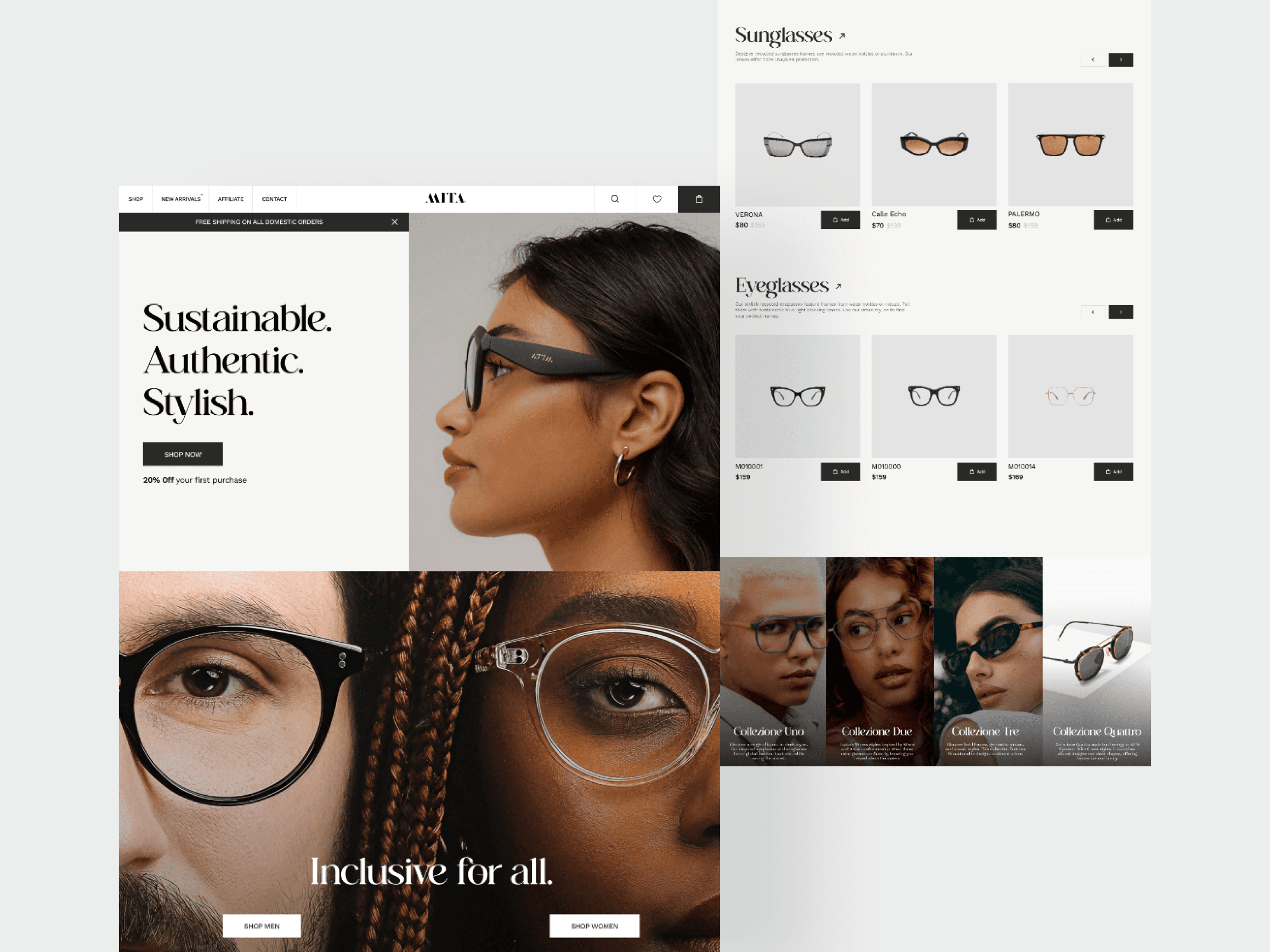
I restructured the information architecture, and redesigned the interface with clearer visuals. Throughout the process, I stayed aligned with MITA’s brand by using a restrained color palette and clean layouts, while working within a two-week timeline that covered both design and Framer development.
I restructured the information architecture, and redesigned the interface with clearer visuals. Throughout the process, I stayed aligned with MITA’s brand by using a restrained color palette and clean layouts, while working within a two-week timeline that covered both design and Framer development.
The visuals and impact
The visuals and impact
The visuals and impact
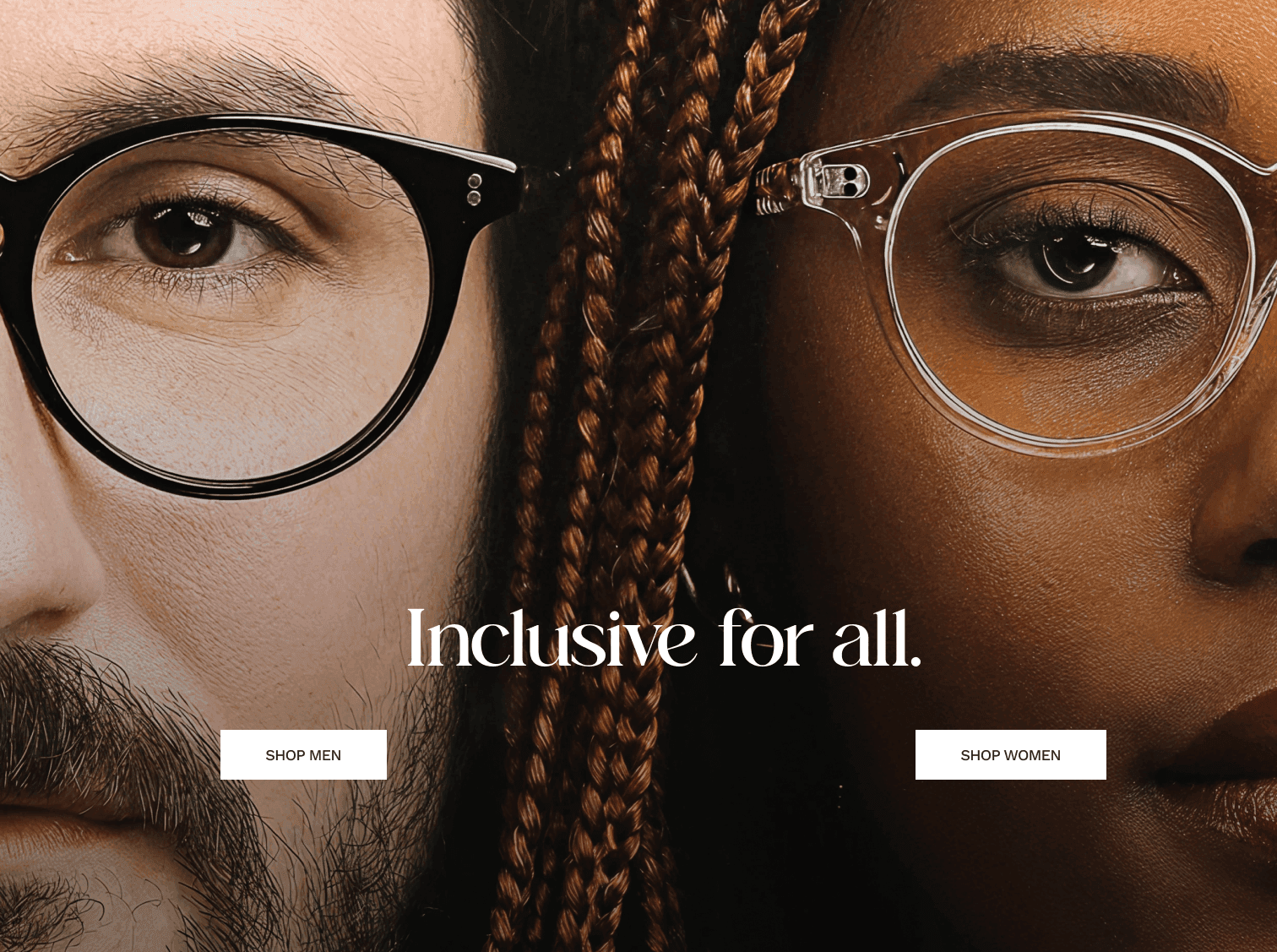
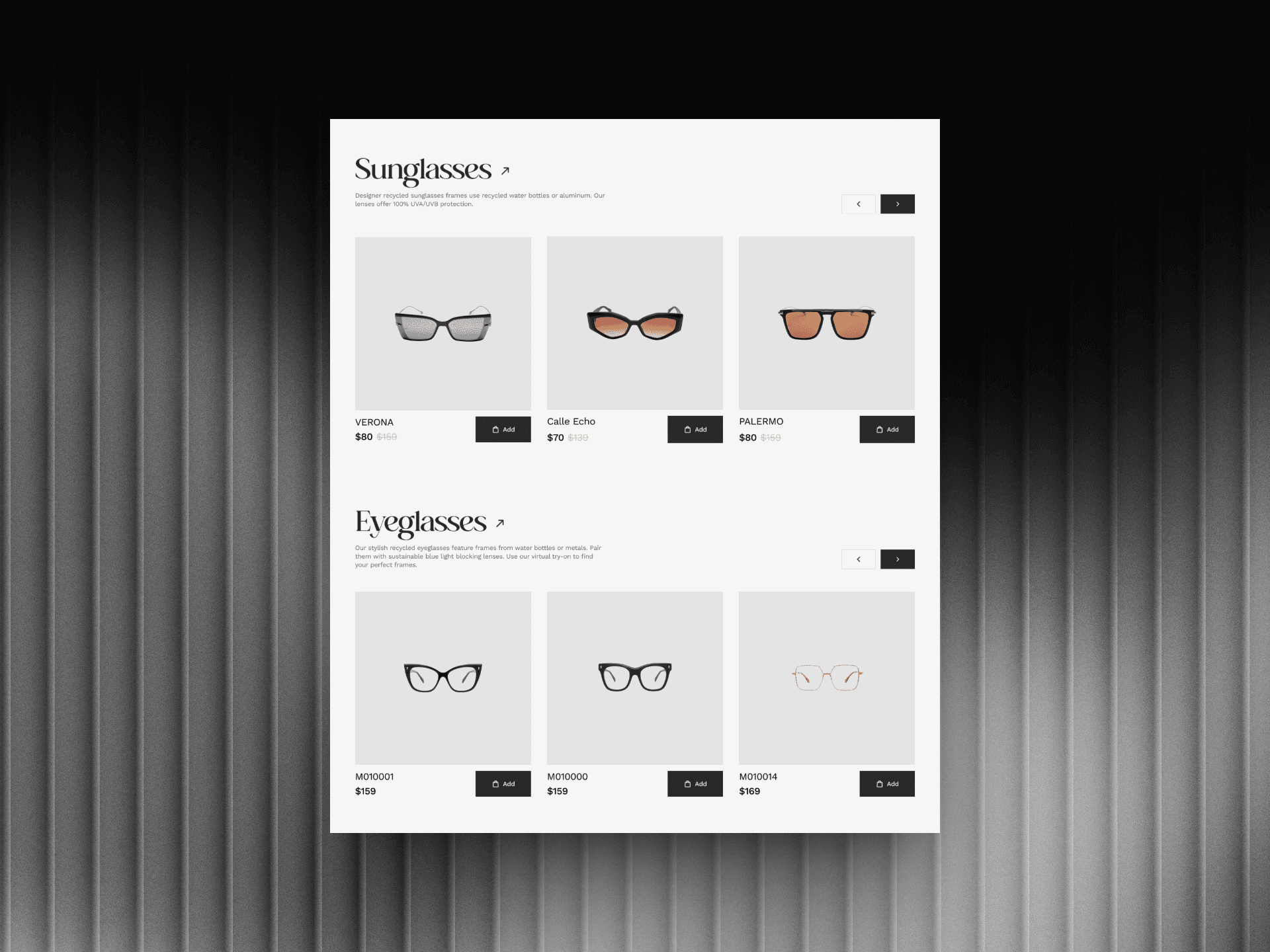
The visual direction focused on clarity, balance, and product emphasis. I refined the layout to give the eyewear more breathing room, allowing products to stand out without competing with unnecessary visual noise. Typography was used intentionally to create a clear reading flow, helping users scan pages quickly and understand key information at a glance.
The visual direction focused on clarity, balance, and product emphasis. I refined the layout to give the eyewear more breathing room, allowing products to stand out without competing with unnecessary visual noise. Typography was used intentionally to create a clear reading flow, helping users scan pages quickly and understand key information at a glance.
[OLD] MITA Website: The existing website struggled with unclear navigation, low-visibility calls to action, and a weak visual hierarchy, making it difficult for users to browse with confidence on what they want.
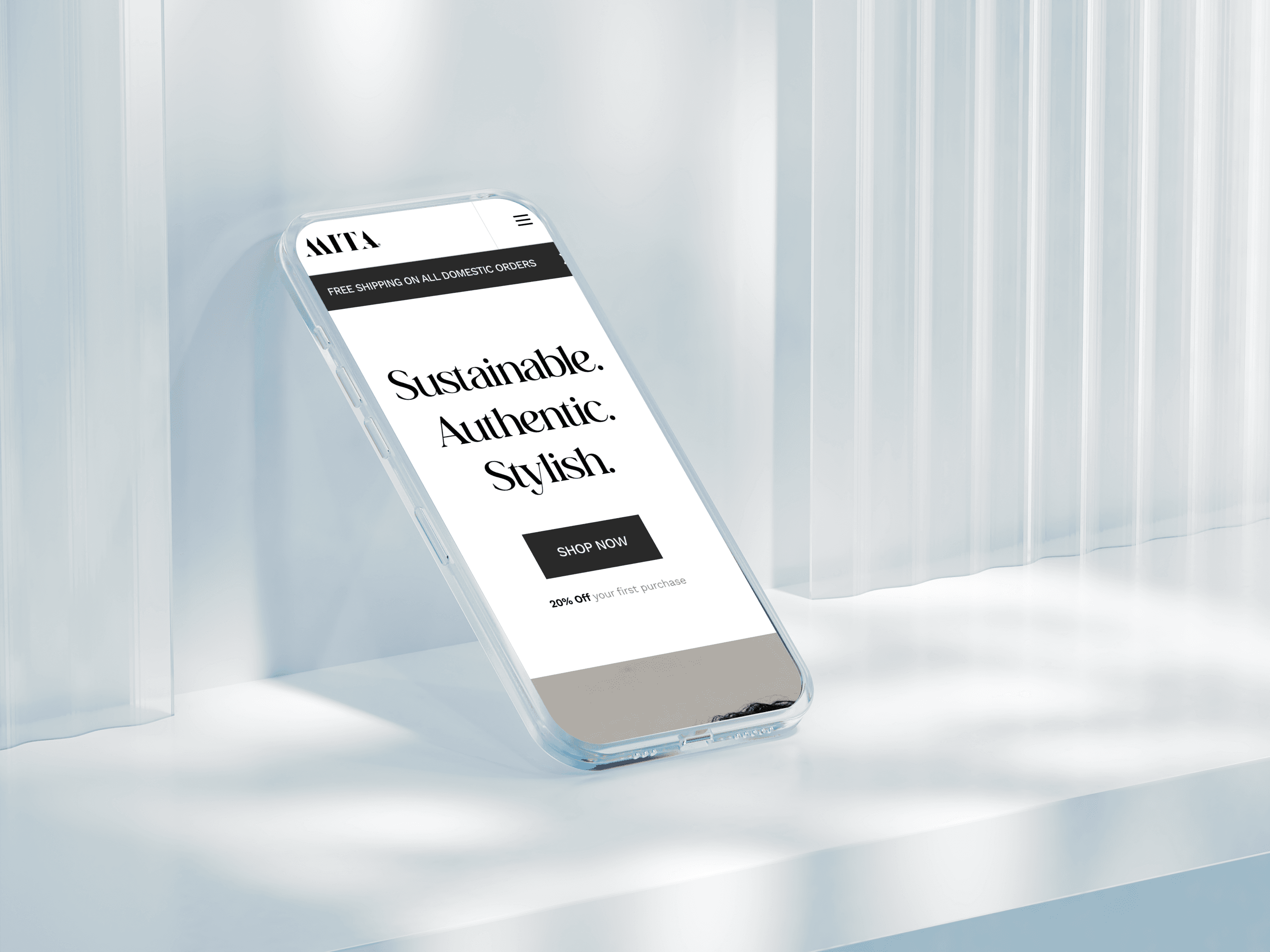
[NEW] MITA Website: The redesigned website clearly improves conversion by guiding users more through the shopping journey. Better visual hierarchy, clearer calls to action, and simplified navigation help users find eyewear products faster, stay engaged, and move to checkout with less hesitation.
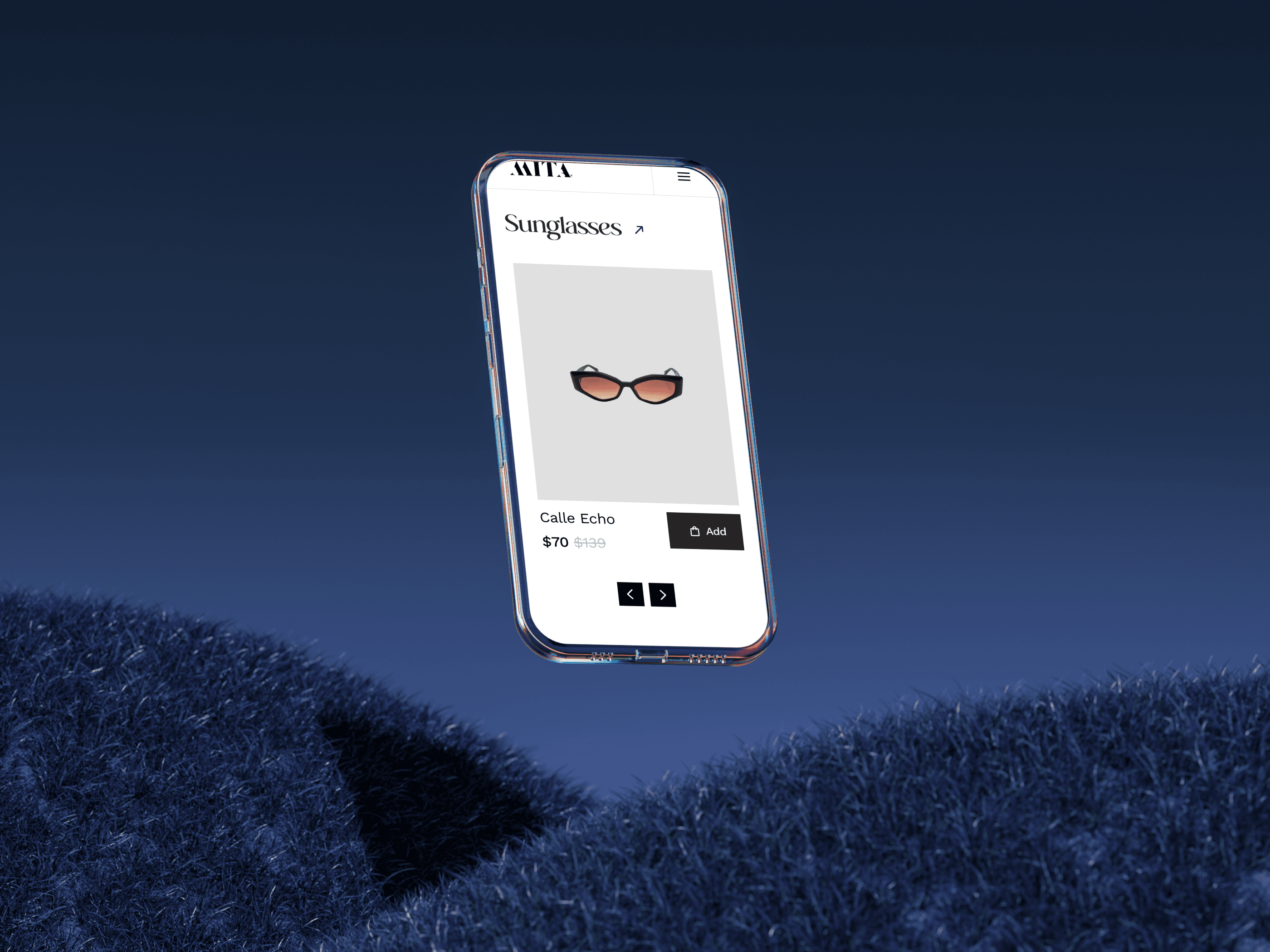
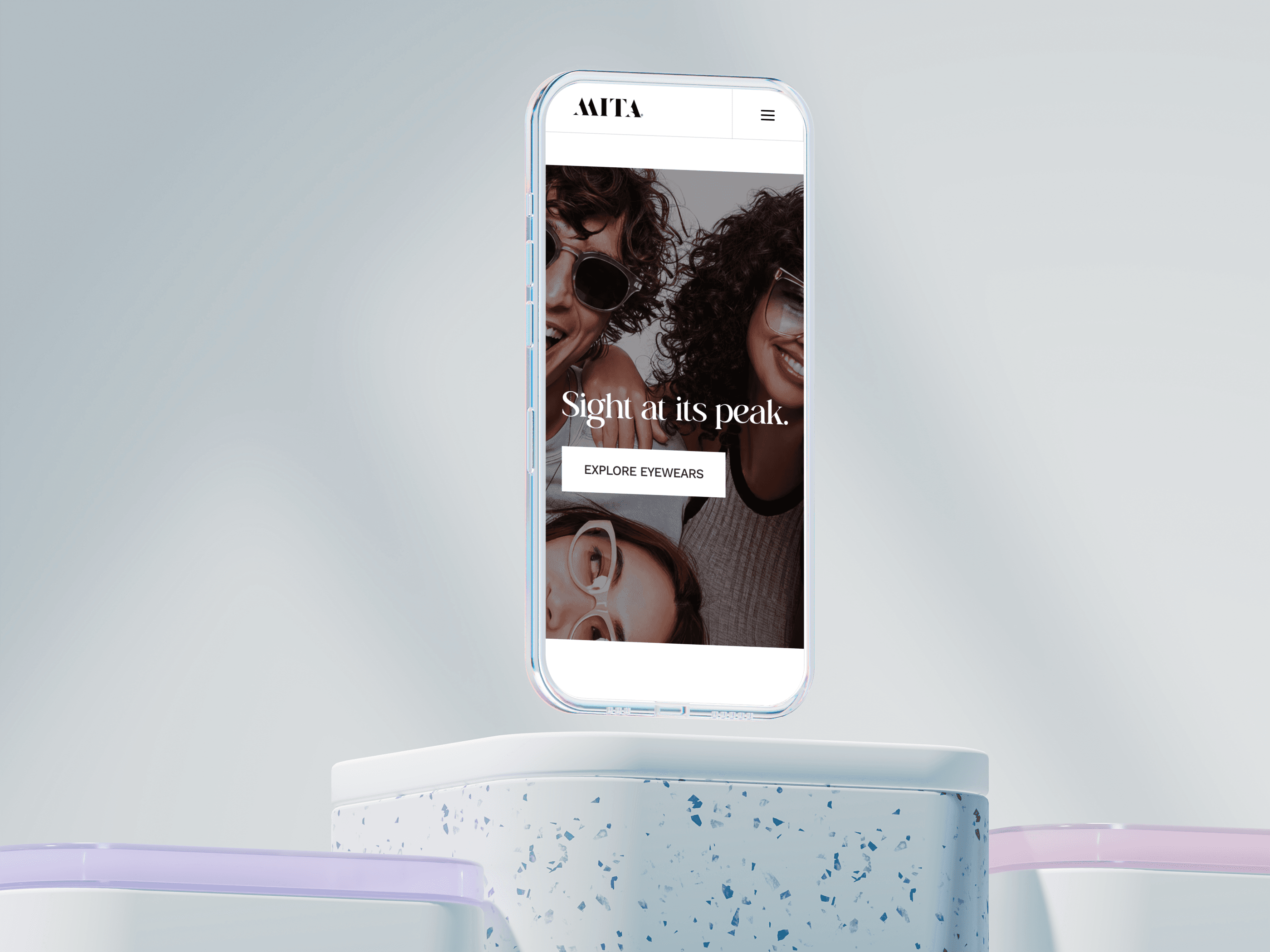
Mobile responsiveness was a key focus in the redesign, knowing that most customers shop from their phones. The layout, spacing, and interactions were optimized for smaller screens to ensure smooth browsing and fast decision-making, helping reduce drop-offs and improve conversions on mobile.
Key Outcomes
Key Outcomes
Key Outcomes
Based on usability best practices and post-redesign evaluation, the improved experience is expected to deliver measurable gains across the shopping journey.
Clearer navigation and hierarchy are projected to increase product discovery and task success by 30–40%, while streamlined flows and stronger CTAs could reduce user friction by 25%.
Mobile optimization is expected to improve engagement and checkout completion by 20–30%, supporting higher overall conversion across both new and returning users.
Based on usability best practices and post-redesign evaluation, the improved experience is expected to deliver measurable gains across the shopping journey.
Clearer navigation and hierarchy are projected to increase product discovery and task success by 30–40%, while streamlined flows and stronger CTAs could reduce user friction by 25%.
Mobile optimization is expected to improve engagement and checkout completion by 20–30%, supporting higher overall conversion across both new and returning users.
Takeaways
Takeaways
Takeaways
This redesign demonstrates how thoughtful UX and clear visual structure can directly support conversion and engagement in e-commerce. By reducing friction, improving mobile usability, and guiding users more confidently through the shopping journey, the MITA Eyewear website is better positioned to turn visits into purchases.
This redesign demonstrates how thoughtful UX and clear visual structure can directly support conversion and engagement in e-commerce. By reducing friction, improving mobile usability, and guiding users more confidently through the shopping journey, the MITA Eyewear website is better positioned to turn visits into purchases.